
Introduction:
Targeted induced-proximity therapeutics have transformed drug discovery. PROTACs induce ubiquitin-mediated degradation of disease proteins, whereas RIPTACs selectively eliminate biomarker-positive cells by recruiting essential proteins to disease-specific proteins.
Mechanistic Differences PROTACs vs RIPTACs:
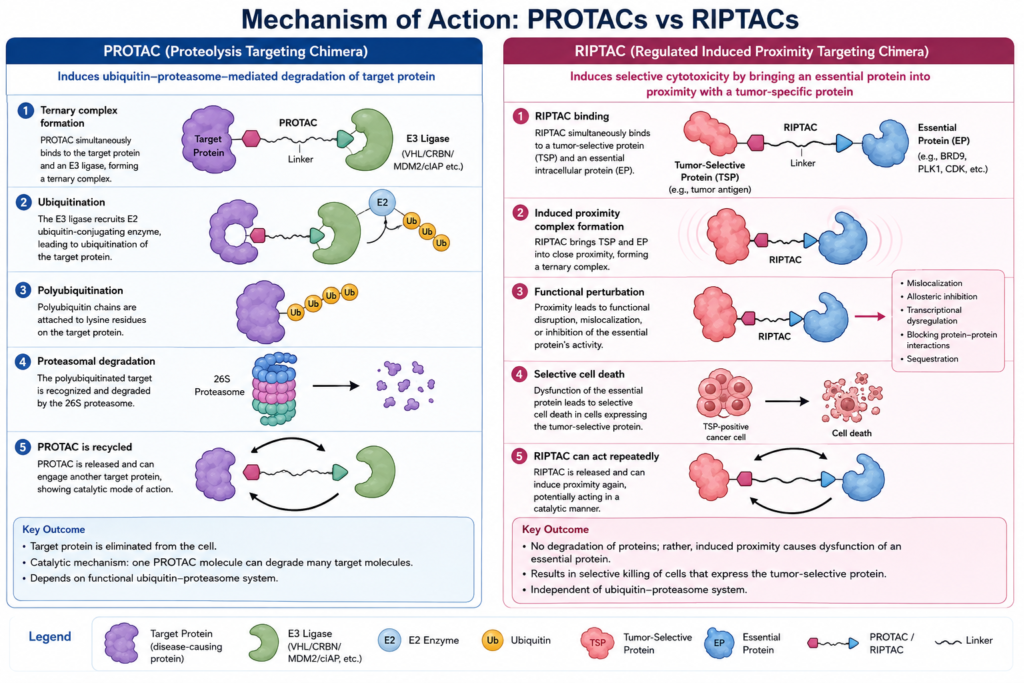
Figure-1: Mechanism of action- PROTACs vs RIPTACs
Detailed Comparison- PROTACs vs RIPTACs:
| Parameter | PROTACs | RIPTACs |
| Full Form | Proteolysis Targeting Chimera | Regulated Induced Proximity Targeting Chimera |
| Primary Mechanism | Induces degradation of target protein via ubiquitin-proteasome system | Induces selective cytotoxicity by bringing an essential protein into proximity with a tumor-specific protein |
| Mode of Action | Forms ternary complex between target protein, PROTAC, and E3 ligase leading to ubiquitination and degradation | Forms induced proximity complex between a cancer-selective protein and an essential effector protein, causing dysfunction or cell death |
| Catalytic? | Yes. One PROTAC molecule can degrade multiple target proteins | Potentially catalytic, but mechanism depends on repeated induced proximity events |
| Target Outcome | Elimination of disease-causing protein | Selective killing of cells expressing a disease-specific biomarker |
| Cell Selectivity | Depends on target expression and E3 ligase distribution | High selectivity achieved through expression of tumor-specific protein |
| Requirement for Target | Target protein must possess ligandable binding site | Requires ligand for disease-specific protein and ligand for essential protein |
| Protein Fate | Protein degradation | Usually no degradation; functional sequestration or disruption |
| Dependence on Proteasome | Yes | No |
| Dependence on Ubiquitination | Yes | No |
| Main Biological Process | Ubiquitin-mediated proteolysis | Regulated induced protein proximity |
| Typical Components | Target ligand + linker + E3 ligase ligand | Tumor-selective ligand + linker + essential protein ligand |
| Common Effector | E3 ligases (VHL, CRBN, MDM2, cIAP) | Essential proteins (e.g., BRD9, PLK1, CDKs, translation machinery) |
| Target Class | Kinases, transcription factors, scaffolding proteins, receptors | Cells expressing disease-specific proteins |
| Resistance Mechanisms | Loss of E3 ligase, mutations in target, proteasome impairment | Loss of biomarker expression, altered essential protein levels |
| Drug Size | 700–1200 Da | Similar or slightly larger (800–1500 Da) |
| Physicochemical Challenges | High MW, poor permeability, low oral bioavailability | Similar challenges; often larger due to dual high-affinity ligands |
| Pharmacokinetics | Often limited by permeability and clearance | Similar challenges, with additional complexity depending on effector ligand |
| Therapeutic Goal | Remove pathogenic proteins | Selectively kill diseased cells while sparing normal cells |
| Major Advantage | Can drug “undruggable” proteins through degradation | Can exploit non-essential tumor markers to selectively eliminate cancer cells |
| Main Limitation | Requires functional ubiquitin-proteasome machinery | Requires highly selective disease biomarker and compatible effector protein |
| Current Clinical Status | Multiple molecules in clinical trials; some approaching late-stage development | Early preclinical stage; proof-of-concept emerging |
| Typical Disease Areas | Cancer, inflammation, neurodegeneration, infectious diseases | Primarily oncology |
| Examples | Arvinas’s CRBN-mediated ER degrader vepdegestrant (VEPPANUTM), the first FDA-approved PROTAC. | Halda’s RIPTACs™ to address challenging cancers, such as AR (androgen receptor)+ pancreatic metastatic tumors. Following its entry into Ph. 1/2 clinical trials (NCT06800313) in February 2025, Halda’s lead asset, HLD-0915, an AR–BRD4-engaging heterobifunctional RIPTAC™ molecule, received FDA Fast Track designation and demonstrated preliminary efficacy. |
Initial Proof of concept RIPTAC for precision Oncology:
Halda and the Crews Lab demonstrated the RIPTAC™ concept using engineered HaloTag-FKBP cells. A prototype RIPTAC, comprising an FKBP ligand, PEG linker, and CDK binder, achieved ~1,000-fold selective cytotoxicity in FKBP-expressing cells versus controls, validating induced protein proximity as a strategy for selective cell killing.
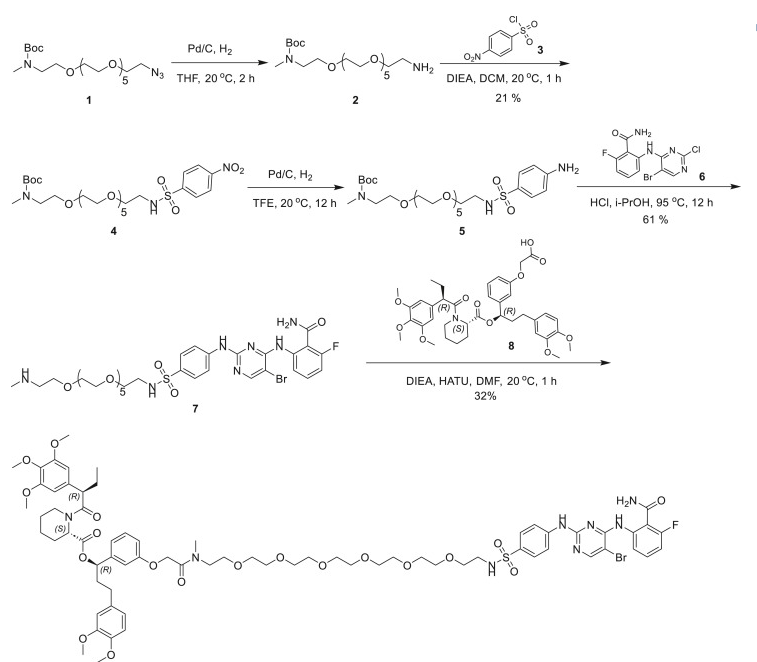
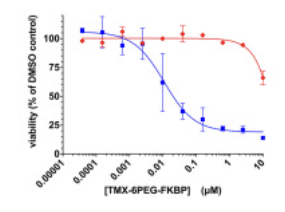
Figure-2: Synthesis of RIPTAC™ & induced anti-proliferative activity in a HEK293-derived 293_HFL model cell for the proof-of-concept molecule, TMX-6PEG-FKBP.
Medicinal Chemistry Considerations:
Both modalities are large heterobifunctional molecules with molecular weights typically above conventional small molecules. Optimization focuses on linker length, exit vectors, ternary-complex cooperativity, permeability, metabolic stability, and oral exposure. For RIPTACs, careful selection of the biomarker ligand and essential-protein ligand is critical to maximize tumor selectivity while minimizing off-target effects.
| Feature | PROTAC | RIPTAC |
| Linker optimization | Critical for productive ternary complex formation | Critical for productive induced-proximity complex formation |
| Ligand affinity | Moderate affinity can be sufficient due to catalytic mechanism | High affinity is generally desirable for both binding partners |
| Cooperativity | Key determinant of degradation efficiency | Important for selective proximity induction |
| Exit vector selection | Essential | Essential |
| Structure-guided design | Widely established | Increasingly important as structural data emerge |
| ADME optimization | Major challenge due to large molecular size | Similar challenges, often compounded by additional binding requirements |
RIPTACs for Precision Oncology: HLD-0915 Becomes the First Clinical-Stage RIPTAC:
Halda Therapeutics advanced the RIPTAC™ platform from concept to clinical development, initially targeting the androgen receptor (AR), which is frequently overexpressed in metastatic prostate cancer. This elevated AR expression enhances the selectivity of the RIPTAC™ approach by preferentially targeting tumor cells over healthy tissues. HLD-0915 employs a silent AR binder to avoid receptor activation, while its effector protein (EP) ligand targets BRD4. Although its full structure remains undisclosed, patent filings suggest that HLD-0915 incorporates a JQ1-like BRD4-binding moiety.
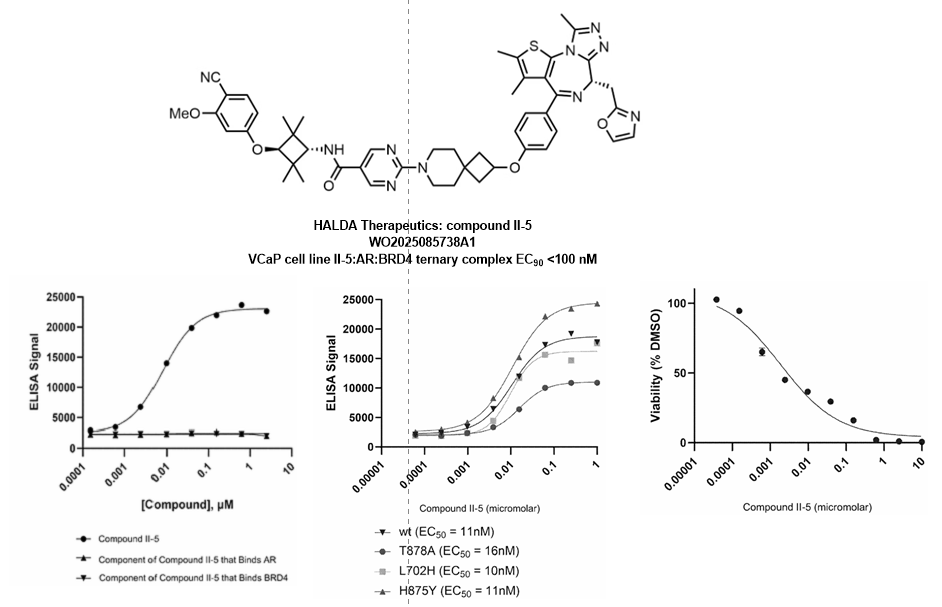
Figure-3: in vitro data for Compound II-5: Halda’s patent application WO2025085738A1
Key Preliminary safety, pharmacokinetics, and antitumor activity of HLD-0915:
- HLD-0915 orally once daily is well tolerated with minimal and manageable TRAEs
- HLD-0915 has demonstrated encouraging activity across all doses tested
- Encouraging safety and anti-tumor activity is proof of concept for RIPTACs in other tumor types
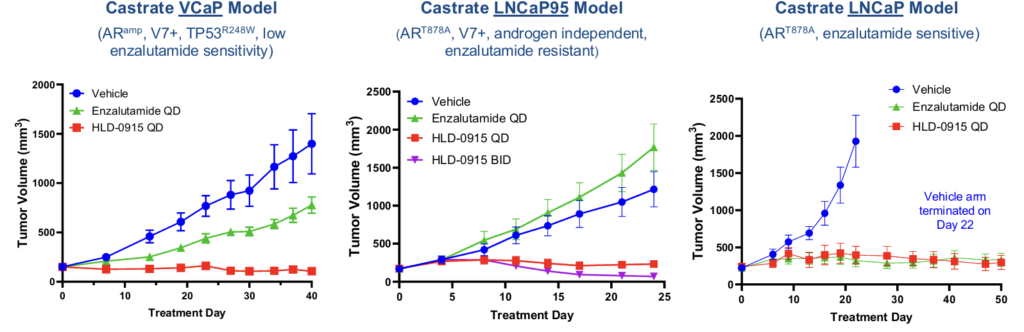
Figure-4: HLD-0915 demonstrates oral bioavailability and efficacy consistent with PK/PD
Rapidly Advancing RIPTAC™ Programs:
Following the clinical advancement of HLD-0915 and ER (estrogen receptor) RIPTAC™ (HLD-0117) in phase-1 clinical trials, other companies have entered the RIPTAC field. Kolm Therapeutics developed RIPTAC-like heterobifunctional conditional inhibitors that selectively target pan-essential proteins in biomarker-positive cells. Prior to its acquisition by Roche in 2025, the company filed patents covering AR–CBP/p300 and ER–CBP/p300 RIPTAC-like molecules, highlighting growing industry interest in this emerging therapeutic modality.
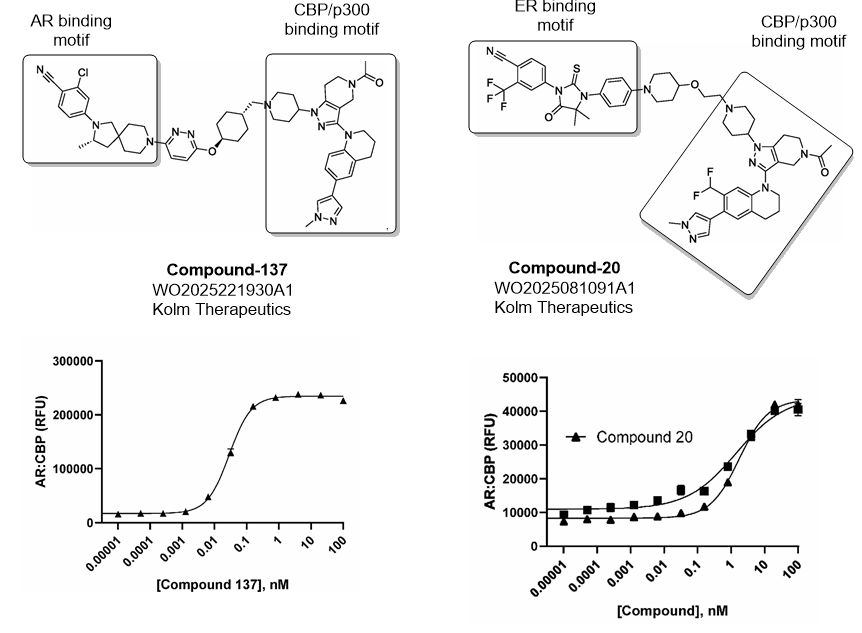
Figure 5. Representative compounds from Kolm’s patent applications WO2025221930A1 and WO2025081091A1
Conclusion:
PROTACs represent the most clinically advanced targeted protein degradation technology and have demonstrated broad therapeutic potential. RIPTACs expand induced-proximity pharmacology by enabling selective killing of biomarker-positive cells without relying on the ubiquitin–proteasome system. Together these technologies are expected to complement each other in next-generation precision medicines.
Author: Ramakrishna Guduru Ph.D.